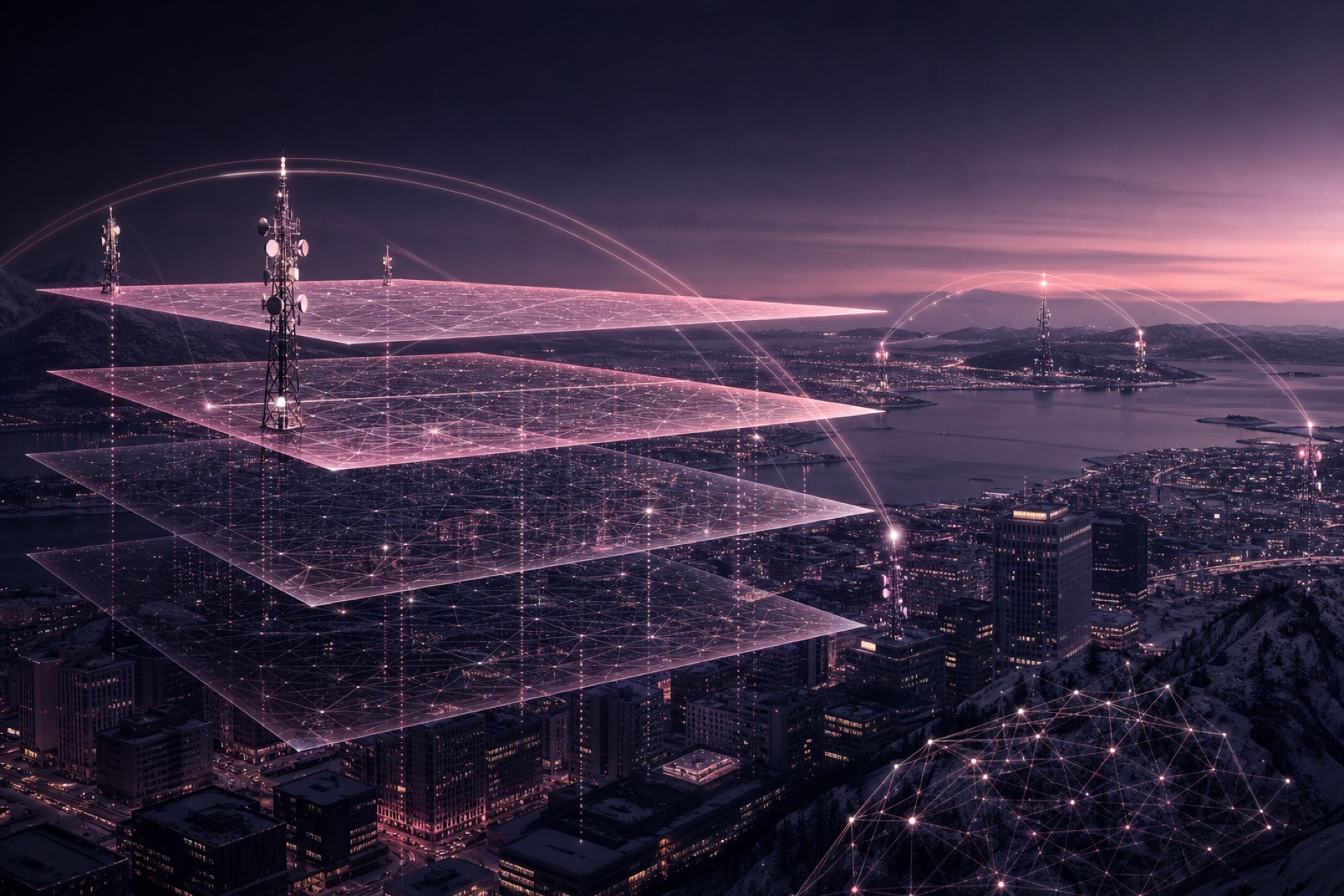
My current research ambition sits at the intersection of wireless communication, practical security and post-quantum cryptography. The central question is not simply how to replace one algorithm with another. It is how cryptographic migration changes timing, bandwidth, energy use, trust and failure behaviour across a layered communication system.
Why the OSI model is a useful lens
The OSI model is an abstraction, but it helps separate responsibilities. At the physical layer, wireless systems face interference, channel variation and hardware constraints. At the data-link and network layers, identity, association, routing and handover become visible. Transport and application layers add sessions, end-to-end guarantees and domain-specific trust.
Post-quantum costs are not uniform
Post-quantum key establishment and signatures can have larger keys, ciphertexts or signatures than familiar elliptic-curve mechanisms. The impact depends on where a protocol operates. A few additional kilobytes may be routine on a wired application connection yet material during a constrained wireless handshake, a low-power device exchange or a dense mobility event.
Research questions across layers
- Physical and link: can channel characteristics support complementary authentication signals without being mistaken for cryptographic identity?
- Network: how do larger credentials affect discovery, roaming and control-plane congestion?
- Transport: what handshake and resumption designs preserve latency under intermittent connectivity?
- Application: which assets need long-term confidentiality, and where should hybrid migration begin?
Toward measurable designs
I am interested in evaluation that combines security arguments with operational measurements: airtime, packet fragmentation, retransmission, energy consumption, mobility delay and recovery after failure. A design should be cryptographically sound, but it must also remain deployable in the networks and devices people actually use.
Post-quantum migration is a systems problem expressed through cryptography.
The long-term objective is a layered migration framework that identifies which protections belong where, how they interact and what trade-offs a wireless operator can measure before deployment.